

No headings found
Every second counts when a potential customer lands on your website. Studies have repeatedly demonstrated that over 50% of mobile users will abandon a page if it takes longer than 3 seconds to load. That's a figure that Auckland businesses can't afford to ignore in a digital world. The performance of websites has gone from being a nice-to-have to a business-critical factor, and the brands that are getting the message are already ahead of the curve in search results and customer retention.
Most business owners are concerned with the visual design and the compelling copy, and that's a good thing. However, the technical performance and site speed are the backbone of it all, and it is what will make or break whether visitors can experience it or not. If your website is not designed well, it will not be of any use if it slows down while loading.
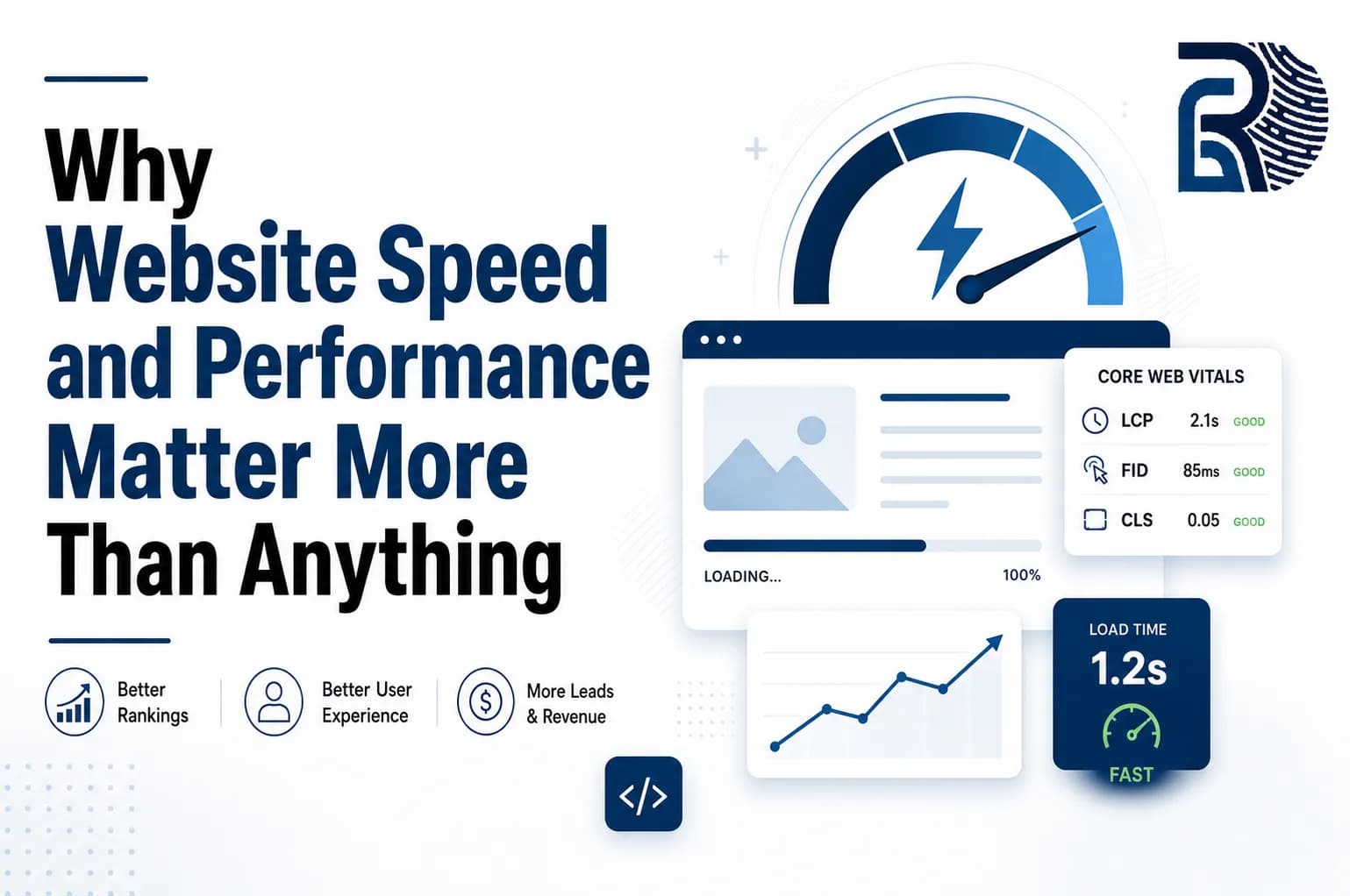
Google's stance was clear when it announced Core Web Vitals as official ranking signals. These metrics reflect real user experiences: content load time, page interaction time, and layout stability on load. Poor performance on these signals can lead to ranking penalties, loss of organic traffic, and diminished SERP visibility. If you are a business that is dealing with a website development company in Auckland, then it is no longer an option to understand these metrics.
One of the common misconceptions is that website speed only impacts user experience. The truth is that page performance is a combination of technical SEO and conversion optimization. Crawl budgets are used by search engines to index websites, and slow or bloated pages waste crawl budgets. The lack of indexing and crawlability directly affects the amount of your site that Google can see and rank.
A comprehensive technical audit of your site can reveal performance problems that you may not have known about, such as uncompressed images, render-blocking scripts, too many redirects, and slow server response times. These are the types of issues that creep up over time and negatively impact organic search without any clear indicators.
When it comes to web design and development in Auckland, these technical considerations are essential for creating a site that truly meets the needs of its users and performs well in search engine results.
Google's Core Web Vitals are divided into three categories. Largest Contentful Paint is the time it takes for the main content to appear. First Input Delay (currently in the process of being renamed to Interaction to Next Paint) is the time it takes for a page to react to user interactions. Cumulative Layout Shift is a metric for visual stability, which is the degree to which elements move around during page load.
If any of these signals fail, it will not only impact search rankings but also user trust. If a page moves unexpectedly or freezes while interacting with it, visitors will think of the brand. These micro-moments form the online reputation of your content, and they occur before you've even written a single word.
In addition to search rankings, website performance can also be measured in terms of conversion rates. Google and Deloitte research revealed that a mere 1/10 of a second faster mobile site speed resulted in substantial increases in conversion rates for retail, travel, and financial services. For Auckland businesses that invest in website development services, the ROI of performance optimisation can be quicker and more measurable than other digital marketing tactics.
Visitors who experience fast, stable, responsive websites are more likely to browse further, engage with calls to action, and return. If visitors experience friction, lag, or layout errors, they leave, usually for good.
Performance cannot be treated as an afterthought. Slowly built sites tend to accumulate technical debt rapidly, which will need costly remediation later. The best way to do this is to incorporate performance standards into the development process from the beginning.
This involves selecting the right hosting infrastructure, optimizing assets at build time, lazy loading images and media, and using modern formats such as WebP. It also requires regular monitoring, as performance will drop over time as content, plugins, and third-party scripts are added.
A web design and development team in Auckland familiar with these standards will ensure the final product is not only aesthetically pleasing but also technically robust. The top websites are designed with both the user and search engine needs in mind.
Search behaviour has evolved. Users are accessing websites on mobile devices with different connection speeds. Google is indexing the mobile version of sites first. AI-driven search tools are prioritising fast, authoritative, and well-structured content in their results. The standards for website quality have significantly increased, and performance is at the heart of that change.
By prioritizing speed as a strategic investment, businesses are setting themselves up for long-term success in terms of organic traffic, user engagement, and brand credibility.
Rapid Digital Growth provides website development services in Auckland, delivering websites that are as fast, technically sound, and effective as they are beautiful. Contact us to see how a faster, stronger website can help your business grow.
 Website Development & Design
Thinking of hiring one website development company in Dubai for corporate and ecommerce website development? Here's the honest breakdown.
Read More Website Development & Design
Discover how UK businesses are using ecommerce website development services to scale faster convert more and build stores that work long after launch day.
Read More Website Development & Design
See how a trusted website design and development company in Saudi Arabia builds sites that convert, load fast, and pass local compliance checks.
Read More